Your Cart is Empty


Flip-flop season is officially here. And for a lot of people, that also means cracked heels, rough skin, and feet they'd rather keep hidden.
You're not imagining it. About 20% of American adults deal with cracked skin on their feet, and summer is the season that makes the problem worse. More heat, more open-toed shoes, more time on pool decks and sandy beaches. All of it works against you.
The good news is that you don't need a fancy pedicure or a shelf full of products to fix it. A simple daily routine with the right natural ingredients is enough to keep feet soft and healthy all summer long. Here's where to start.
At a Glance
The soles of your feet have no oil glands at all. Unlike your face or hands, they can't produce their own natural moisture. They depend entirely on sweat and whatever you apply topically. When summer heat, open shoes, and dehydration enter the picture, that moisture disappears fast, and dry, cracked heels are the result.
A lot of people assume sweating more in summer should help. But hot weather causes feet to sweat and then rapidly lose moisture as that sweat evaporates. Add in sandals that leave heels exposed to dry air and rough surfaces, and the problem compounds quickly.
The skin on your heels is also naturally thicker than elsewhere on your body. That thickness helps absorb the pressure of walking. But when it dries out, it cracks. And those cracks can go from mildly uncomfortable to genuinely painful if you leave them untreated.
When you switch to sandals or flip-flops, several things happen at once. Your heels lose the protective cushioning of enclosed shoes. They're exposed to UV rays, wind, and uneven surfaces. And if you're walking barefoot on concrete, sand, or pool decks, you're adding physical abrasion to the mix.
Sand, saltwater, and pool chemicals all pull moisture from skin quickly. Chlorine is especially drying because it strips your skin's natural lipid barrier. The more time your feet spend in and around water this summer, the more intentional you'll need to be about moisturizing them afterward.
The most common mistake people make is treating cracked heels reactively. They reach for lotion only when it hurts. The better approach is preventive: start moisturizing now, before the dryness sets in, and keep it up consistently through the season.

A good natural foot cream does three things. It penetrates deeply to hydrate beneath the surface of thick heel skin. It locks that moisture in with a breathable protective barrier. And it brings ingredients that soothe irritation, fight bacteria and fungus, and keep feet smelling fresh. Look for a formula that combines rich carrier oils, a natural occlusive like beeswax or shea, and purposeful essential oils.
Plain coconut oil moisturizes but doesn't seal in the hydration. Synthetic creams often include synthetic fragrances and preservatives that irritate sensitive skin. The sweet spot is a well-rounded formula that blends nourishing base oils with a protective wax layer and skin-supporting botanicals.
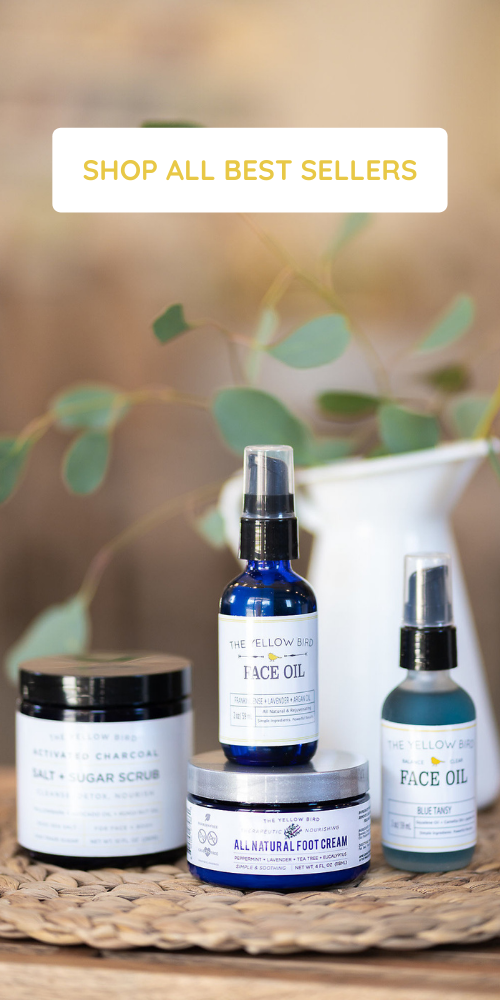
At The Yellow Bird, our All Natural Foot Cream was built around exactly this approach, combining tea tree oil, peppermint, shea butter, beeswax, and coconut oil into a formula that absorbs quickly and keeps working throughout the day.
| Foot Cream | Body Lotion | |
|---|---|---|
| Target skin | Thick, calloused heel and sole skin | Thinner skin on arms, legs, body |
| Formulation | Dense and concentrated | Light and thin |
| Key ingredients | High-concentration shea butter, beeswax, essential oils | Lighter emollients, higher water content |
| Absorption on feet | Deep, lasting penetration | Evaporates quickly, surface-level only |
| Best used for | Cracked heels, daily foot care, odor and fungus protection | General body moisturizing after a shower |
At a Glance
Not all natural moisturizers are equal on foot skin. Here's what the research actually says about the key players.

Shea Butter
One of the most well-studied natural ingredients for cracked skin. It's rich in fatty acids and vitamins A and E, which penetrate deeply into thick heel skin rather than sitting on the surface. Shea also contains natural anti-inflammatory compounds, including cinnamic acid and lupeol, that help calm irritated and cracked skin as it heals.
Beeswax
Acts as the sealant. After nourishing oils have soaked in, beeswax forms a breathable layer on the surface that prevents transepidermal water loss. Unlike many synthetic occlusives, beeswax lets skin breathe while holding in moisture. And because it doesn't melt until 62 to 64°C, it stays effective even on hot summer days.
Tea Tree Oil
Brings antifungal and antibacterial protection. A 2002 study from Harvard Health noted that a 50% tea tree oil concentration improved athlete's foot symptoms in 64% of participants. Tea tree contains terpinen-4-ol, a compound that disrupts the cell walls of bacteria and fungi, making it especially valuable for feet that spend time on warm, damp surfaces like pool decks and locker room floors.
Peppermint Oil
Delivers that instantly refreshing cooling sensation that feels great in summer. The menthol in peppermint activates TRPM8 receptors in the skin, producing a cooling effect and helping relieve achiness in tired, overworked feet. Peppermint also has natural antibacterial properties that keep foot odor in check.
Coconut Oil
Rounds out the base with lightweight hydration that helps the formula spread smoothly without feeling greasy in the heat.
For more of our plant-based summer essentials, browse The Yellow Bird's Wellness and Aromatherapy collection.
At a Glance
The most effective summer foot routine takes less than five minutes. Wash your feet with a gentle soap, apply foot cream while your skin is still slightly damp, and let it absorb before putting on shoes. Done consistently, this prevents most cracking before it ever starts.
Your 5-Minute Summer Foot Routine
Yes. A natural foot cream that includes tea tree oil and peppermint actively works against the bacteria and fungi behind athlete's foot and foot odor. These aren't just moisturizing ingredients. Tea tree oil has documented antifungal activity, and peppermint's antibacterial properties help neutralize the odor-causing bacteria that thrive in warm, sweaty conditions.
If you're dealing with more persistent foot issues like recurring athlete's foot, or skin that won't seem to heal, The Yellow Bird's Heal and Soothe collection has products built for skin that needs a little extra support. And if you're not sure where to start, our skin quiz gives you a personalized recommendation in about a minute.
Your feet carry you through every summer adventure. Hiking trails, beach days, backyard cookouts, late-night walks. They deserve some attention.
The key things to remember: your feet have no oil glands, so they depend completely on what you give them. Summer heat, sandals, and outdoor surfaces strip moisture faster than you'd expect. A daily five-minute routine with the right natural ingredients, especially shea butter, beeswax, tea tree, and peppermint, makes the difference between cracked heels and soft, healthy feet all season long.
Start now, before the cracks set in. Your feet will thank you by August.
The most common reason is timing. Moisturizer absorbs best when applied to damp skin right after washing, when pores are more open. Applying it to dry skin has a much lower effect. Cracked heels also need daily attention in summer because heat and open shoes strip moisture faster than occasional treatment can replace it. Switching to a twice-daily routine and adding an overnight sock treatment can make a big difference quickly.
Foot creams are formulated for the thicker, tougher skin on the soles and heels. Regular body lotions are lighter and designed for thinner skin elsewhere on the body. A quality foot cream contains higher concentrations of rich occlusive ingredients like shea butter and beeswax that can penetrate thick heel skin and stay put. Body lotion tends to evaporate quickly from feet without delivering lasting hydration.
Yes, when properly diluted in a carrier oil or cream base. Tea tree oil should never be applied directly to skin at full concentration. In a well-formulated cream, it's diluted to a safe and effective level. Harvard Health notes that tea tree oil is safe for topical use at concentrations below 15%, which is well within the range of a properly made foot cream.
Mild cracking typically improves within 1 to 2 weeks of daily use. Deeper cracks can take 3 to 4 weeks of consistent treatment. The overnight sock method speeds up the process considerably. The most important thing is daily consistency. Applying foot cream every few days produces slow, minimal results. Daily application, especially right after washing, is what produces lasting change.
Yes. Hydration plays a real role in skin health all over your body, including your feet. Dehydration shows up in the skin as dryness and reduced elasticity. Drinking enough water throughout the day supports your skin's ability to hold moisture from the inside out. Foods rich in healthy fats, like avocado, nuts, and olive oil, also support skin barrier function and help skin stay supple in the heat.
By The Yellow Bird
The Yellow Bird is a family-owned natural skincare and wellness brand handcrafting plant-based products in North Carolina since 2015. Every formula is made with simple, honest ingredients and no synthetic fragrances, parabens, or sulfates.