Your Cart is Empty


Personal care labeling in the United States runs on an honor system. The FDA doesn't approve label claims before products hit shelves. Brands self-certify, and consumers trust the label.
Shampoo bars have two separate places where that trust gets stretched. The first is the "sulfate-free" claim, which can hide ingredients like sodium coco sulfate, a surfactant that contains SLS as part of its own composition. The second is the word "fragrance," which can legally conceal dozens of undisclosed synthetic chemicals in a single label entry. These are different problems, hiding different ingredients, in different parts of the formula.
It's actually why we made our bars the way we did. We kept seeing "sulfate-free" bars with sodium coco sulfate listed right in the ingredients, and we wanted to make something you didn't have to decode.
Here's what the label isn't telling you.
At a Glance
"Sulfate-free" has no legal definition, and the FDA does not approve cosmetic label claims before products reach store shelves. A brand can print it on a package as long as the claim can be technically defended. And some brands defend it simply by removing SLS while keeping other sulfates in the formula.
This matters because SLS is just one sulfate among several. Sodium laureth sulfate, ammonium lauryl sulfate, and sodium coco sulfate are all sulfate-based surfactants. A product that swaps out SLS for any of them can still carry an "SLS-free" claim with no regulatory challenge.
The FDA monitors products after they reach the market, not before. That means products with misleading labels can sit on shelves, and in your shower, long before anyone flags them. The burden of reading carefully falls entirely on you.
At a Glance
Sodium coco sulfate (SCS) is a surfactant derived from whole coconut oil that contains up to 50% sodium lauryl sulfate by composition. Because it's made from coconut oil rather than an isolated fatty acid, it goes by a different name. But the cleansing chemistry, and a significant portion of the compound itself, overlaps with SLS.
Because SCS is technically a different ingredient, brands can market products as "SLS-free" even when SCS is clearly listed in the formula. This isn't a gray area. It's a recognized labeling practice in the personal care industry.
It matters for your scalp. Research has shown that SLS irritates skin by damaging the barrier at subtoxic levels. Studies have found that SLS increases skin barrier disruption and can worsen conditions like eczema and scalp sensitivity. An ingredient with 50% SLS in its composition carries some of that same risk, especially with repeated daily use.
We go into more detail on why SLS is a problem for your scalp in a separate post. The short version: if you switched to a shampoo bar specifically to get away from sulfates, checking only for "SLS" in the ingredient list is not enough.
At a Glance
Once you've confirmed there are no sulfates in a shampoo bar, there's a second, completely unrelated thing to check: the word "fragrance" or "parfum."
This has nothing to do with sulfates. It's a different issue in a different part of the formula. When you see "fragrance" on an ingredient list, that single word can represent an entire blend of undisclosed synthetic chemicals. Brands are not required to reveal what's in their fragrance formula. It's protected as a trade secret under federal law.
An independent test commissioned by the Campaign for Safe Cosmetics found compounds associated with hormone disruption, accumulation in human tissue, and allergic reactions among the hidden chemicals in fragrance blends. An average of 14 hidden chemicals per product. None of them had to be disclosed.
Phthalates are one of the most common hidden ingredients. They're used to extend the life of a scent, and they're linked to endocrine disruption, including effects on reproductive health. A 2025 review in Frontiers in Toxicology found that regular exposure to cosmetic fragrances can contribute to a range of health concerns, particularly for people with existing sensitivities.
We use only essential oils in our shampoo bars, never fragrance or parfum. We didn't want any undisclosed chemicals near your scalp. If you want to understand what separates essential oils from synthetic fragrance, we've covered that in detail separately.
A clean shampoo bar has to pass two separate checks: no sulfates, and no synthetic fragrance. Here's how to run both.
Checking for sulfates:
1. Scan for any word containing "sulfate."
SLS, SLES, sodium coco sulfate, ammonium lauryl sulfate — they're all sulfates. If any ingredient includes the word "sulfate," the bar contains a sulfate, whatever the front label says.
2. Don't stop at "SLS-free."
That claim tells you only that isolated SLS was removed. It says nothing about other sulfate compounds. Read the full ingredient list, not just the marketing on the front.
3. Look for "saponified" in the ingredient list.
Saponified oils, such as saponified coconut oil, olive oil, or castor oil, are the result of a natural soap-making process. They contain no sulfates by chemistry. If you see saponified oils as the base, you're looking at a true soap-based bar.
Checking for synthetic fragrance (a separate issue):
4. Check the fragrance entry.
"Fragrance" or "parfum" means undisclosed synthetic ingredients. This is unrelated to sulfates but is its own red flag. Essential oils like peppermint, tea tree, or eucalyptus should each be listed by their individual name.
5. Notice the length of the ingredient list.
A soap-based bar made with plant oils typically has a short, readable list. A long list packed with unfamiliar surfactant names usually signals a syndet (synthetic detergent) formula, even when it's marketed as natural.
| Typical "SLS-Free" Bar | Soap-Based Bar (Yellow Bird) | |
|---|---|---|
| Contains sulfates? | Often yes, via SCS or SLES | No sulfates of any kind |
| Cleansing agent | Synthetic surfactant | Saponified plant oils |
| Fragrance type | Often synthetic fragrance | Essential oils only |
| Ingredient list | Long, often complex | Short, plant-based |
| Lather source | Added foaming agents | Natural oils (coconut, castor) |
A soap-based shampoo bar is made through saponification: plant oils are combined with sodium hydroxide (lye), and through that reaction they transform into true soap with no sulfates anywhere in the formula. This is not a marketing choice. It's just how soap chemistry works.
This is different from a syndet bar, which is essentially solidified liquid shampoo built from synthetic surfactants. Syndet bars can be marketed as "natural" or "sulfate-free" while still containing sodium coco sulfate or other lab-made cleansing agents. With a soap-based bar, there are no surfactants to choose, swap, or rename on a label.
Each oil in the formula serves a purpose. Coconut oil provides cleansing action and creates a natural lather. Castor oil and olive oil condition and soften. Sunflower oil adds a light slip that keeps the formula gentle. Then we add essential oils for scent. That's it.
We've heard from customers who described previous shampoo bars leaving their scalp "itching like crazy," or hair that was "completely greasy even after double cleansing." When you remove every sulfate from the formula rather than just renaming one, you get a different result. People often describe our bars as "completely free of any questionable ingredients," and that's exactly the standard we hold them to.

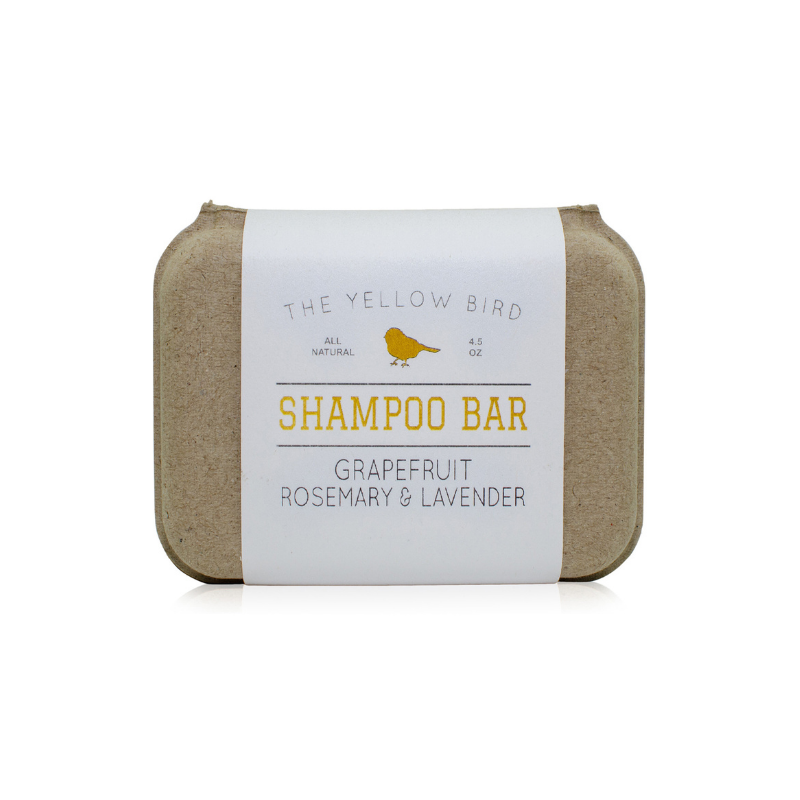
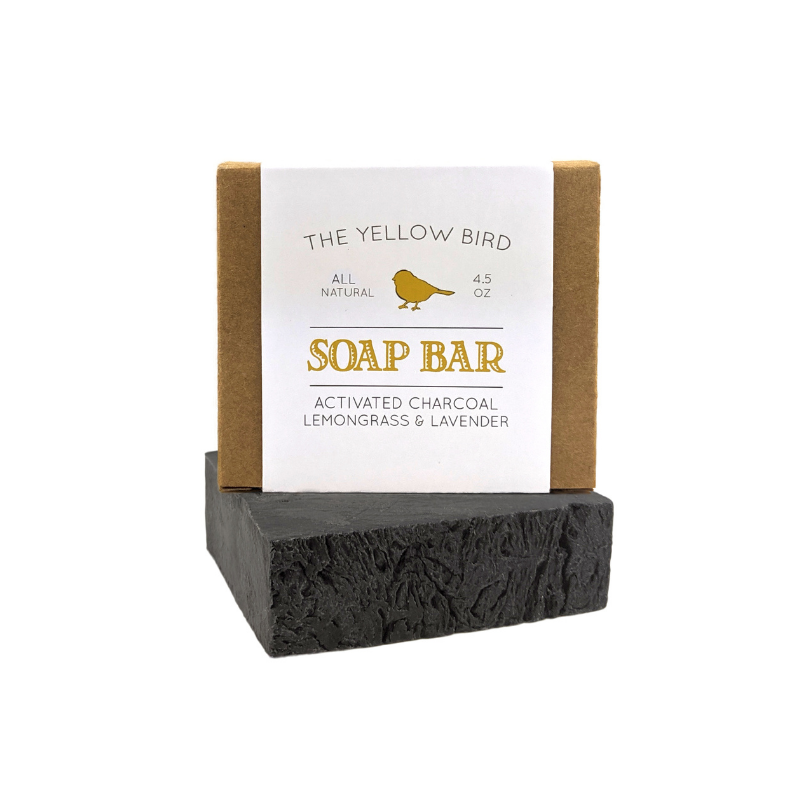
Every shampoo bar made at The Yellow Bird is soap-based. The cleansing comes from saponified plant oils, not synthetic surfactants. There are no sulfates by chemistry, not just by label. There is no sodium coco sulfate. There is no fragrance or parfum. Every scent comes from essential oils listed by name. Two separate checks, both passed.
You can see exactly what's in each bar:
One honest thing worth knowing: switching from a conventional shampoo bar to a soap-based one can come with a short adjustment period while your scalp recalibrates. We explain what to expect and how to make that transition smoother in our shampoo bar FAQ. It's a normal part of leaving synthetic surfactants behind, and for most people, well worth it.
There are two separate things to check when you pick up a shampoo bar. First, scan the ingredient list for any word containing "sulfate." Second, check whether the scent comes from essential oils or from a catch-all "fragrance" entry. These are different problems with different solutions, but both matter.
We made our shampoo bars because we kept seeing a gap: products swapping one sulfate for another and calling it clean, and bars listing "fragrance" with no disclosure of what that meant. We wanted to make something that passed both tests without you having to ask.
If you're ready to use something genuinely sulfate-free with nothing hiding in the ingredient list, our bars are a good place to start.
Is sodium coco sulfate the same as sodium lauryl sulfate?
Not exactly, but they're closely related. Sodium coco sulfate contains up to 50% sodium lauryl sulfate by composition. Because it's technically a different ingredient, brands can label products "SLS-free" while still using SCS. If you're trying to avoid sulfates entirely, look for SCS on the ingredient list as well.
How can I tell if a shampoo bar is truly sulfate-free?
Read the full ingredient list and look for any word containing "sulfate," including sodium coco sulfate, sodium laureth sulfate, and ammonium lauryl sulfate. If the bar lists saponified oils as its cleansing base, it contains no sulfates. If it lists synthetic surfactants, it may contain sulfates regardless of what the front label says.
Are soap-based shampoo bars safe for color-treated or chemically processed hair?
Soap-based bars are generally gentle enough for color-treated hair. Some people prefer to follow up with an apple cider vinegar rinse to help close the hair cuticle and add shine. If your hair is heavily processed, give it a few weeks and pay attention to how your scalp responds during the adjustment period.
What does "fragrance-free" mean on a shampoo bar label?
A fragrance-free bar contains no added fragrance compounds, synthetic or natural. This is a separate consideration from sulfates entirely. Bars scented with essential oils are not technically fragrance-free, but each oil should appear on the ingredient list by its individual name. "Fragrance" or "parfum" is a catch-all term that can legally conceal dozens of undisclosed synthetic chemicals.
Can a sulfate-free shampoo bar still irritate my scalp?
It can, depending on the formula. Some bars labeled as sulfate-free still contain sodium coco sulfate, which carries some of the same irritation potential as SLS. Synthetic fragrance is a separate but equally common scalp irritant. A truly soap-based bar with no synthetic ingredients addresses both issues at once.
By The Yellow Bird
The Yellow Bird is a family-owned natural skincare and wellness brand handcrafting plant-based products in North Carolina since 2015. Every formula is made with simple, honest ingredients and no synthetic fragrances, parabens, or sulfates.