Your Cart is Empty


After a single exposure to sodium lauryl sulfate, the scalp's moisture barrier can take two to five days to fully recover. For anyone washing their hair every day or every other day, that means the scalp is almost always mid-repair when the next wash hits.
Most people don't think about shampoo this way. You lather, rinse, repeat. But the ingredients in conventional shampoo have a measurable effect on scalp health over time, and once you understand what's happening, a gentler alternative starts to make a lot more sense.
A lot of our customers found us because their scalp was the last thing they hadn't figured out yet.
They'd switched their soap, their deodorant, their lotion. But shampoo felt harder, and every bar they'd tried either left their hair waxy or their scalp itching. We heard it so many times it stopped surprising us. We'd dealt with the same thing in our own family, and we already knew that sensitive skin doesn't just live on your arms and face. So we built the bars the same way we built everything else: as few ingredients as possible, every one of them earning its spot.
Most conventional shampoos are built around sulfate-based detergents, most commonly sodium lauryl sulfate (SLS) or sodium laureth sulfate (SLES). These are powerful cleansers derived from petroleum, and they do a thorough job removing dirt and oil. The problem is they're not precise. Research has shown that SLS-based shampoos cause hair shafts to swell and cuticle layers to lift open, stripping the oils your scalp actually needs alongside the ones you're trying to wash away.
When the scalp loses its natural sebum, it responds by producing more. That overproduction is part of why many people feel like they need to wash their hair every day. Wash too often, strip again, overproduction continues.
To compensate, most conventional shampoos add silicones. Silicones coat the hair shaft and give it a smooth, shiny appearance even when the underlying hair is depleted. They're not nourishing anything. They're covering the evidence.
The concern isn't permanent damage to the follicle itself. It's the chronic, repeated disruption of a scalp barrier doing important protective work every day. Strip it often enough and it never quite catches up.
At a Glance
A liquid shampoo is mostly water. Some estimates put it as high as 80 percent. That water content requires preservatives to keep the formula stable and prevent bacterial growth. Many of those preservatives are the same ingredients people are trying to get away from when they go looking for a cleaner shampoo.
A bar has no water.
Without needing to keep a liquid shelf-stable, a shampoo bar can be built almost entirely from active ingredients: oils, butters, botanical extracts, and natural cleansers. No filler. No preservatives holding water together. The formula is concentrated, which is part of why one bar typically delivers 50 to 80 washes compared to the roughly 20 to 30 washes you'd get from a standard bottle.
You can read more about what goes into a good bar on our all about shampoo bars page. And if the plastic-free side of the decision matters to you, the eco case for shampoo bars is a separate post worth reading.
We cold-process every bar instead of using heat because we want to preserve the goodness of the ingredients as much as possible. One of the reasons I started The Yellow Bird was because I wanted products my family could actually use, made thoughtfully and not as quickly as possible. That hasn't changed.
What most people don't realize about small-batch production is how much of it is still done by hand. Real people are mixing, pouring, cutting, checking, labeling, packing. There are easier ways to make products. We just haven't found a better way.
The curing process matters because patience matters. (Not my strongest character trait, if I'm being honest.) A freshly made bar and a properly cured bar are two very different things. Giving the bar time to cure creates a harder, longer-lasting bar that performs better in the shower and doesn't disappear after a week. Rushing that process saves time on our end and costs you on yours.
Not all shampoo bars are built the same. Some still use SLS as the primary cleanser, just pressed into bar form. That's worth checking before you buy.

A bar worth switching to should be built on coconut-derived cleansers and carrier oils, not petroleum-based detergents. Here's what to look for on the label:
You can browse a full breakdown of these ingredients and their properties in our natural ingredient glossary.
People sometimes assume you pick a few ingredients, mix a batch, and you're done. Oh man... I wish.
We went through a lot of versions of the peppermint bar before landing on one that felt right. Bars that looked beautiful and didn't perform well. Bars that performed well but didn't feel quite right. Bars that smelled amazing but weren't the experience we wanted customers to have. The shower is the real test. Every single time. You can love how something looks on paper and still have it fall completely flat where it actually matters.
What we kept learning was that focusing on what sounded good on paper, instead of how the bar actually performed in the shower, sent us in the wrong direction every time. Once we stopped optimizing for the idea of the bar and started optimizing for the experience of using it, things clicked.
Peppermint stayed in the formula because of how it makes you feel when you step out of the shower. Refreshed. Awake. There is just something about that clean, alert feeling that makes people genuinely look forward to washing their hair, and that's not a small thing. Same logic with rosemary, which has more research behind it for hair growth than almost anything else we could have reached for, and lavender, which keeps the scalp environment calm for people who are already reactive to most products. Every oil has a job. We're a small operation and we're not going to fill a bar with something that doesn't pull its weight.
At a Glance
For most hair types, yes. How well it performs depends less on the bar itself and more on two things: your water hardness and how much product residue you're starting with.
Hard water is the bigger variable. Water with high mineral content can react with natural cleansers and leave a slight film on the hair shaft after washing. A diluted apple cider vinegar rinse, about a tablespoon in a cup of water poured through the hair after shampooing, neutralizes the pH and clears that film. Most people who stick with bar shampoo work it into their regular routine.
The other factor is what your hair is clearing out. After years of conventional shampoo and silicone-based conditioners, there's likely residue built into your scalp and hair shaft that the bar has to work through before it can do its job properly. That's the adjustment period, and it's real. Two to four weeks is typical.
Good to Know
The adjustment period can feel discouraging before it gets better. If your hair feels heavy or waxy during the first few weeks, you're not doing anything wrong. For detailed troubleshooting by hair type, water hardness, and wash frequency, this guide walks through what to expect and how to get through it faster.
What most people report after that initial stretch: hair that stays clean for an extra day or two, a scalp that's calmer and less reactive, and in many cases better natural texture than they've had in years. Curly hair responds particularly well. We hear from customers regularly that their curl definition came back in a way they hadn't seen since before they started using conventional products. One described it as her hair "finally doing what it's supposed to do."
After switching to our own bars, the thing I noticed first was how much simpler my routine got. Less clutter in the shower, fewer bottles, less wondering whether I was putting something on my skin that I couldn't even pronounce. They're also incredibly easy to toss in a travel bag, which I didn't fully appreciate until the first trip where I didn't have to think about liquids at all.
What I tell my daughters when they use the bar: focus on your scalp, not your hair. The healthiest hair starts at the scalp. And don't be afraid to really work up a lather. The first use can feel different from liquid shampoo, but once you get the hang of it, it's genuinely easy.
The most common thing we hear from first-time customers is some version of "I didn't think this was going to work for my hair, but..." Those are some of my favorite emails to read, honestly.
For anyone frustrated during the transition: give yourself a little grace. Hair is personal. Water is different everywhere. What works perfectly for one person may take a little tweaking for someone else. We're always happy to help troubleshoot because we want people to be successful, not frustrated. And if you've been using shampoo bars for years and have a tip you love, we genuinely want to hear it.
For a closer look at how different hair types tend to respond, this post breaks it down by texture and scalp type.

| Natural Shampoo Bar | Conventional Liquid Shampoo | |
|---|---|---|
| Primary cleanser | Coconut-derived, no petroleum | SLS or SLES (petroleum-based) |
| Preservatives needed | None (no water to preserve) | Yes, to prevent bacterial growth |
| Silicones | None | Commonly added to restore shine |
| Effect on scalp oils | Cleans without stripping sebum balance | Strips natural oils, triggers overproduction |
| Washes per unit | 50 to 80 washes per bar | 20 to 30 washes per bottle |
| Packaging | Plastic-free | Single-use plastic bottle |
If your scalp has felt like a problem you haven't been able to solve, it might be worth looking at what's been cleaning it.
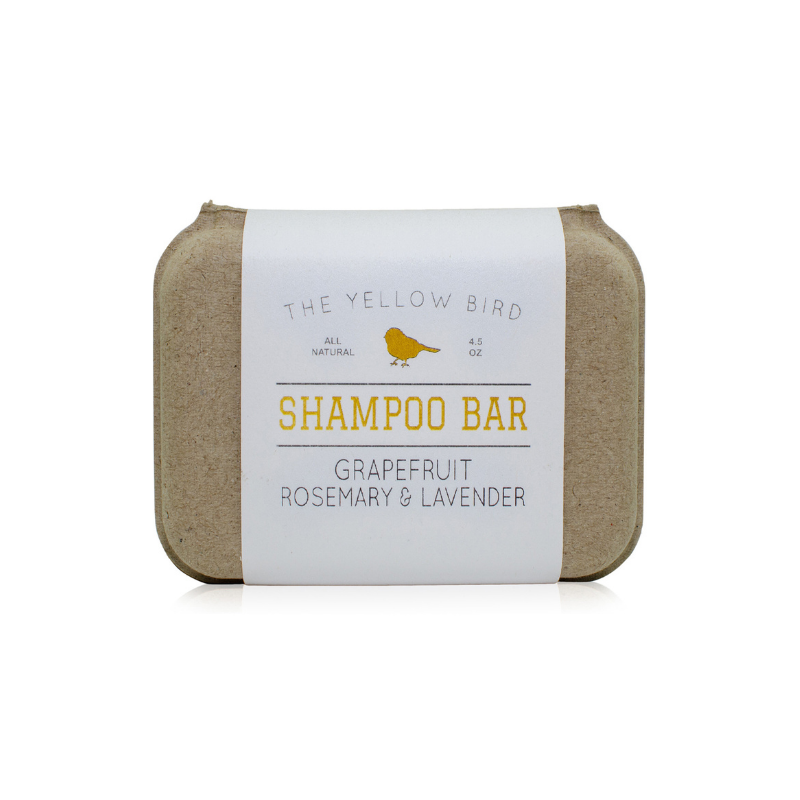
The Yellow Bird shampoo bars are made without sulfates, silicones, synthetic fragrance, or preservatives. Just oils, botanical extracts, and ingredients chosen because they do something. There are four options, each built with essential oils selected for specific scalp needs: peppermint for circulation and scalp health, grapefruit and rosemary for curl support and balance, eucalyptus and tea tree for oily or reactive scalps, and citrus cedarwood for something grounding and mild.

We make products for families who want to know what they're putting on their skin. That started The Yellow Bird and it drives every formula we make. Shampoo was always part of that picture. It just took us a little longer to get there.
Yes, though the lather feels slightly different at first. Natural shampoo bars produce a dense, rich foam when worked into wet hair. Lathering the bar in your hands first rather than rubbing it directly on your hair makes a noticeable difference. Most people adjust within a few washes and stop thinking about it.
One bar typically delivers 50 to 80 washes, compared to the 20 to 30 washes you'd get from a standard bottle. Bars last longest when stored somewhere they can dry out between uses. A draining soap dish is worth the small investment.
The waxy feeling during the first few weeks comes from two things happening at once: your scalp readjusting its oil production after years of being stripped by sulfates, and your hair clearing out silicone buildup from conventional products. It's temporary. An apple cider vinegar rinse after washing speeds up the process. Most people are through it within two to four weeks.
Natural shampoo bars made without SLS, synthetic fragrance, or silicones are generally a better option for sensitive scalps than conventional liquid shampoo. Customers who had persistent scalp itching, flaking, or irritation with conventional products often see improvement after switching. Everyone's scalp is different, though. If you have a diagnosed scalp condition, it's worth checking with a dermatologist before making a change.
Many people with color-treated hair use natural shampoo bars without issue. Bars without sulfates are gentler on color than conventional shampoo. Some people notice slightly faster fading during the adjustment period, when washing frequency tends to be higher. Once the scalp rebalances and washing frequency drops, the effect typically levels out.
Originally published October 2017. Updated June 2026 with new research and sources.
By The Yellow Bird
The Yellow Bird is a family-owned natural skincare and wellness brand handcrafting plant-based products in North Carolina since 2015. Every formula is made with simple, honest ingredients and no synthetic fragrances, parabens, or sulfates.