Your Cart is Empty


Soap molecules have two ends. One loves water. The other loves oil. When you wash your hands, the oil-loving ends grab onto grease and grime, the water-loving ends hold tight to the rinse water, and everything gets carried down the drain.
That's the whole mechanism. It works because of chemistry, not foaming agents, not antibacterial chemicals, not synthetic fragrance. Soap has been cleaning skin for thousands of years with just two ingredients: fat and lye.
So why do most bar soaps today have 15 ingredients on the label?
It's actually what led us to start making soap at The Yellow Bird. We kept hearing from customers whose skin felt stripped and dry after washing. When we looked at what they were using, we kept seeing the same ingredient over and over: sodium lauryl sulfate. This post breaks down what soap actually is, how it works, and what those extra ingredients are really doing to your skin.
At a Glance
Soap is made from fat and lye. When lye (sodium hydroxide) is combined with a fat or oil, a chemical reaction called saponification breaks apart the fat molecules and bonds their fatty acids to sodium, creating soap. A natural byproduct of this process is glycerin, a humectant that draws moisture to your skin. In a properly made bar, all the lye is consumed by the reaction. None remains in the finished product.
The fat can come from many sources. Plant-based soapmakers use oils like olive, coconut, castor, and shea butter. Traditional soap was made from animal fats like tallow or lard. The specific oils chosen affect the finished bar's hardness, lather, and moisturizing properties. Coconut oil creates a harder bar with a bubbly lather. Olive oil produces a creamier, milder bar that's gentler on sensitive skin.

When we're formulating a bar at The Yellow Bird, we deliberately superfat the recipe, meaning we leave some oils unreacted with the lye. Those extra oils stay in the finished soap and condition your skin as you wash. Most commercial soap manufacturers don't superfat. Many remove the glycerin entirely, since it's worth more as a standalone ingredient in lotions and cosmetics. What's left after glycerin extraction is a bar that cleans but doesn't replace what it takes away.
If you're curious about how the making method affects the bar, our post on cold-processed vs. hot-processed soap goes deeper on how heat exposure changes the finished product.
A soap molecule has a water-loving end (hydrophilic) and an oil-loving end (hydrophobic). The oil end attaches to grease, dirt, and germs on your skin. The water end holds onto the rinse water. When you wash, the soap molecules form clusters called micelles, with oil-loving ends pointing inward around the dirt and water-loving ends facing out. Yale School of Medicine describes this process as the soap creating a molecular bridge between the water and the oily grime, which the water then carries away.

This is why water alone doesn't clean oily skin. Oil and water don't mix. Soap is the bridge. It doesn't need extra chemicals to do that job. Antibacterial agents don't help it. Foaming agents don't improve it. The micelle mechanism is effective on its own.
One thing worth saying clearly: lather doesn't equal cleaning power. Britannica notes that lather is largely a sensory experience. Soap cleans through micelle formation, not foam. More foam just means more foaming agents, usually SLS, not more cleaning.
At a Glance
SLS (sodium lauryl sulfate) is a synthetic surfactant added to soap and body wash to increase lather. It cleans, but it doesn't stop at dirt. SLS is anionic, meaning it carries a negative charge that aggressively strips oils from surfaces, including the natural oils your skin needs. A study published in MDPI Cosmetics found that even brief SLS exposure increases transepidermal water loss, decreases stratum corneum hydration, and disrupts skin barrier function.

This is exactly what customers mean when they say soap leaves their skin feeling stripped. That tight, dry feeling after washing isn't your skin getting clean. It's your skin barrier being disrupted. Research published in Contact Dermatitis documented this correlation between SLS concentration and measurable skin irritation. Dermatologists have used SLS as a standard test irritant in clinical studies for decades because its skin-disrupting effects are so reliable and consistent.
We've heard this from customers more times than we can count: "I switched to natural soap and my skin stopped feeling dry after every shower." That's not a coincidence. It's what happens when you stop washing with a surfactant that strips your barrier and start using a bar that leaves conditioning oils behind.
A study published in June 2025 compared natural soap and synthetic detergents in human skin cell assays. Natural soap compounds were significantly less toxic and showed higher cell viability than SLS after 48 hours. Natural soap was also more biodegradable in aquatic environments. This is as close to a head-to-head comparison as we have, and natural soap wins on both skin safety and environmental impact.
If you have sensitive skin, our post on unscented soap for sensitive skin covers what to look for in a bar that won't trigger reactions.
Once consumers started looking for SLS-free products, manufacturers found a workaround. They replaced SLS with chemically related surfactants and gave them different names. The most common one is sodium coco sulfate, or SCS. It sounds natural because it comes from coconut oil. But the starting material doesn't determine the end product.
Because coconut oil is roughly 66% lauric acid by fatty acid composition, sodium coco sulfate ends up being about 66% SLS by makeup. Independent analysis of SCS confirms it's a synthetic detergent with the same basic mechanism as SLS. Labeling a product "SLS-free" while using SCS is the same logic as calling a burger "salt-free" because you seasoned it with a salt-containing spice blend.
Here are names that indicate sulfate-based surfactants on an ingredient label:
Our post on parabens and sulfates covers the broader category of sulfate-based ingredients across other product types beyond soap.
No. The FDA concluded in 2016 that antibacterial soap is not more effective than plain soap and water for everyday handwashing. The FDA's own guidance recommends plain soap and water for routine hand and body washing, and the agency banned 19 active ingredients from consumer antibacterial soaps, including triclosan, after manufacturers could not prove they were safe or more effective than regular soap.
Soap doesn't need to kill germs to clean them off. Micelles grab bacteria and viruses and carry them down the drain. Killing them on contact doesn't improve hygiene outcomes in everyday use. What it does do is contribute to antibiotic resistance and, in the case of triclosan, disrupt hormone cycles.
For a full breakdown of what antibacterial agents actually do and why plain soap outperforms them, read our post on how antibacterial soaps work.
"Fragrance" or "parfum" on an ingredient list is a single word that can represent hundreds of individual chemical compounds. The FDA doesn't require manufacturers to disclose what's inside a fragrance formula because fragrance blends are classified as trade secrets under the Fair Packaging and Labeling Act. That legal exemption leaves consumers with no way to know what they're applying to their skin.
Synthetic fragrance compounds are among the leading causes of contact dermatitis. A 2025 review of fragrance regulation found that fragrance ingredients are associated with sensitization, meaning repeated exposure can cause your skin to begin reacting to products it once tolerated. Phthalates, used to make synthetic scents last longer, have been linked to endocrine disruption and developmental concerns, particularly in young children.
Good to Know
The fragrance loophole applies to all rinse-off and leave-on products, not just soap. If "fragrance" or "parfum" appears on any personal care label, there's no way to know what's in it without contacting the manufacturer directly.
Natural soap doesn't need synthetic fragrance. Essential oils and botanical ingredients add scent through their actual chemical composition, and because they're listed by name, people with specific sensitivities can read the label and make an informed choice. For a broader look at ingredients worth skipping, our guide on chemicals to avoid in skincare is a good starting point.
At a Glance
Most of what's sold in the soap aisle isn't technically soap. It's a detergent bar. Real soap is made through saponification. Detergent bars are formulated with synthetic surfactants like SLS, SLES, and other sulfate-based compounds. The distinction matters because these two product types behave very differently on skin.
| Natural Soap | Commercial Detergent Bar | |
|---|---|---|
| Made with | Fat + lye (saponification) | Synthetic surfactants (SLS, SLES) |
| Glycerin | Retained in bar, conditions skin | Often extracted and sold separately |
| Skin barrier impact | Supports moisture retention | Disrupts barrier, increases water loss |
| Fragrance | Named botanicals or none | Often "fragrance" (undisclosed blend) |
| Antibacterial agents | None needed | Often present; FDA banned 19 in 2016 |
| Environmental impact | More biodegradable, less aquatic toxicity | Less biodegradable, higher aquatic toxicity |
The June 2025 research published in PubMed Central gave us the first direct clinical comparison. Natural soap compounds were less toxic to human keratinocytes (skin cells) and more biodegradable in aquatic environments than SLS. This isn't surprising to anyone who has made soap for a while. But it's good to see the chemistry confirmed in peer-reviewed research.

The practical question isn't whether natural soap is better in a lab. It's whether it works in your daily routine. It does, with one expectation to adjust: natural soap lathers less than an SLS bar. That's not a flaw. Lather is a sensory cue, not a measure of cleaning power. Your skin will figure that out quickly once it stops feeling tight after every shower.
If you want to add gentle exfoliation alongside your soap, our post on building a gentle exfoliation routine pairs well with this one.
The ingredient list on a soap bar tells you a lot. Fat and lye plus a few botanicals means you're holding real soap. A long list of synthetic surfactants, antibacterial agents, and a catch-all "fragrance" means you're holding a detergent bar with a soap marketing budget.
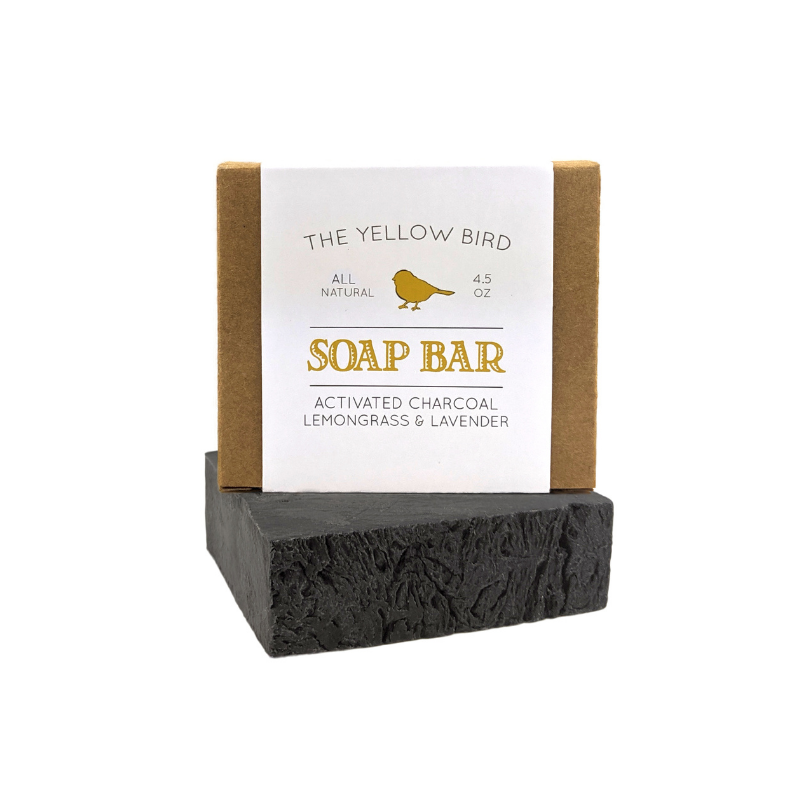
We made our natural soap collection at The Yellow Bird because we believe a bar that cleans your skin shouldn't also strip it. Short ingredient lists. Named botanicals. Honest labels. If you want to see what that looks like in practice, our natural soap bar collection is a good place to start. Every bar is cold-processed, superfatted, and free of SLS, synthetic fragrance, and antibacterial agents.
Real soap doesn't need any of that to work.
Is lye safe in handmade soap?
Yes. Lye (sodium hydroxide) is essential for saponification, the chemical reaction that makes soap. During the reaction, lye is completely consumed by the fat molecules it bonds with. No lye remains in a properly made, fully cured bar. What you're left with is soap and glycerin.
What's the difference between soap and a detergent bar?
Real soap is made by combining fat and lye through saponification. A detergent bar is made with synthetic surfactants like SLS. Most commercial "soaps" are technically detergent bars. They clean through a similar mechanism, but synthetic surfactants are more aggressive on your skin barrier and don't retain the naturally occurring glycerin that real soap does.
Why does natural soap sometimes lather less than store-bought soap?
Because SLS is a powerful synthetic foaming agent and natural soap doesn't have it. Lather has nothing to do with how well soap cleans. It's a sensory cue that consumers learned to associate with cleaning power. Natural soap cleans through the same micelle mechanism. Less foam doesn't mean less clean.
What does "superfatted" soap mean?
Superfatting means adding more fat to the recipe than the lye can fully react with. The unreacted oils remain in the finished bar as free conditioning oils. When you wash with a superfatted soap, those oils coat your skin as the soap rinses away, which is why natural soap bars tend to leave skin soft rather than tight. Most commercial manufacturers don't superfat because it shortens shelf life and reduces the bar's commercial appeal.
Is SLS actually dangerous, or is the concern overblown?
It depends on how you define dangerous. SLS isn't acutely toxic at the concentrations used in soap. But the research is consistent: it disrupts the skin barrier, increases transepidermal water loss, and causes measurable irritation, especially with repeated use. For people with dry, sensitive, or reactive skin, those effects are real and cumulative. SLS doesn't add anything to soap that soap doesn't already do on its own, and it does come with real trade-offs for skin health.
Originally published July 2018. Updated June 2026 with new research and sources.
By The Yellow Bird
The Yellow Bird is a family-owned natural skincare and wellness brand handcrafting plant-based products in North Carolina since 2015. Every formula is made with simple, honest ingredients and no synthetic fragrances, parabens, or sulfates.