Your Cart is Empty


Here's something that might surprise you: the European Union has banned over 1,300 ingredients from use in cosmetics and personal care products. The United States? Just 11.
That gap means a lot of the responsibility for what goes on your skin falls on you. And honestly, navigating a skincare label can feel like reading a foreign language. Long chemical names, tiny print, ingredients you can't pronounce — it's a lot.
We started The Yellow Bird because we believe your skincare should be simple. No guessing games. No mystery ingredients. Just real, honest stuff that actually works for your whole family. So let's break down the biggest offenders and make label-reading a little less overwhelming.

The top chemicals to avoid in skincare products are parabens, sulfates (especially SLS and SLES), synthetic fragrances listed as "fragrance" or "parfum," phthalates, formaldehyde-releasing preservatives like DMDM hydantoin, and synthetic dyes. These ingredients have been linked to hormone disruption, skin irritation, and in some cases, more serious long-term health concerns.
Now let's look at each one up close so you know exactly what to watch for on the label.
Parabens are a group of synthetic preservatives that have been used in cosmetics since the 1920s to prevent mold and bacteria from growing in products. They're effective and cheap, which is why you'll find them in everything from moisturizers and shampoos to deodorants and makeup.
The concern is that parabens can act like estrogen in the body. Research from the Environmental Working Group (EWG) shows that parabens can disrupt hormone systems and have been linked to reproductive harm and increased cancer risk. Even more unsettling: studies have detected parabens in nearly all urine samples taken from adults in the U.S., regardless of age or background.
The FDA notes they're found in a wide variety of leave-on and rinse-off products, and they're absorbed into the body through skin. The more products you use with parabens, the more your daily exposure adds up.
What to look for on the label: methylparaben, propylparaben, butylparaben, ethylparaben, isobutylparaben, or isopropylparaben. If you see any word ending in "-paraben," put it back on the shelf.
At The Yellow Bird, all of our products are completely paraben-free. Always have been.
Sulfates are surfactants, which is a fancy word for foaming agents. They're what gives your shampoo and face wash that rich, bubbly lather. Sodium lauryl sulfate (SLS) and sodium laureth sulfate (SLES) are the two you'll see most often.
Here's the thing: lather doesn't actually clean your skin. It just feels like it does. Sulfates create the impression of deep cleaning, but they work by stripping away everything — including the natural oils your skin needs to stay healthy and balanced.
For people with sensitive skin, eczema, or dryness, sulfates can be a real problem. They can trigger irritation, redness, and over time, strip your skin barrier down. Kids are especially vulnerable. Sulfates are common allergy triggers, particularly in children, and can irritate the eyes and throat.
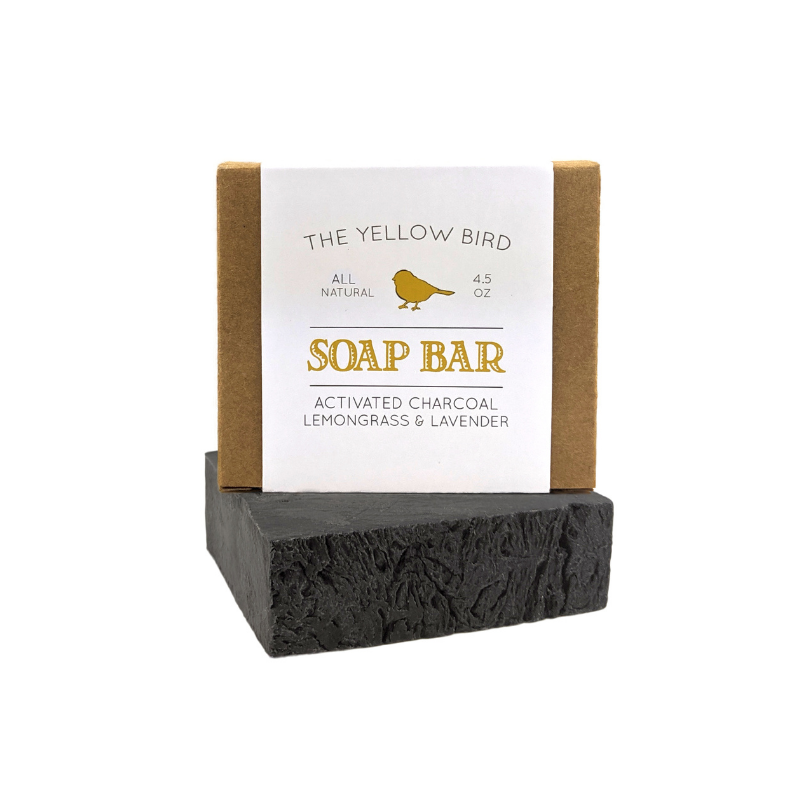
The good news? You don't need sulfates to get clean. Our natural soap bars are made with simple, gentle ingredients that cleanse without stripping. Your skin will feel the difference.
What to look for on the label: sodium lauryl sulfate, sodium laureth sulfate, ammonium lauryl sulfate, or any ingredient that ends in "-sulfate."
This one is tricky. When you see the word "fragrance" or "parfum" on a skincare label, it's not just one ingredient. It can be dozens. Federal law does not require companies to list the individual chemicals that make up their fragrance blend, which means they can hide almost anything behind that one word.
Fragrances can contain hormone disruptors and are considered one of the top allergens in the world. Many fragrance blends contain phthalates (more on those next) and even parabens, all tucked quietly under "fragrance" with no disclosure required.

A 2025 review published in Frontiers in Toxicology found that synthetic chemicals in perfumes and cosmetics, including phthalates and volatile organic compounds (VOCs), are associated with a range of adverse health outcomes. These include allergic reactions, respiratory issues, and endocrine disruption.
The fix is simple: buy fragrance-free wherever possible. Or, choose products scented only with pure essential oils, so you know exactly what you're smelling.
What to look for on the label: "fragrance," "parfum," or "aroma." If you can't tell what's behind the scent, that's a red flag.
Phthalates are a group of chemicals used to make plastics more flexible and to help fragrances last longer on the skin. They're used in shampoos, lotions, and perfumes, often hiding inside that vague "fragrance" listing we just talked about.
Research has found phthalates in over 75% of people tested, which tells you just how widespread the exposure is. They've been identified as potential endocrine disruptors, meaning they may interfere with the way your body produces and responds to hormones like estrogen and testosterone.
Studies have pointed to possible links between phthalate exposure and reproductive health issues, metabolic disruption, and increased allergy and asthma risk, especially in children. An alarming study found 287 chemicals in the umbilical cord blood of ten newborn babies, many of them from personal care and cosmetic products.
That's why, in our holistic skincare guide, we always come back to this: simpler is safer. Fewer ingredients means fewer unknowns.
What to look for on the label: dibutyl phthalate (DBP), diethyl phthalate (DEP), or dimethyl phthalate (DMP). Also, avoid anything that just says "fragrance."
You probably wouldn't buy a product labeled "contains formaldehyde." But you might be using one right now without knowing it.
Formaldehyde-releasing preservatives (FRPs) are ingredients that slowly release small amounts of formaldehyde over a product's shelf life to prevent bacterial growth. The most common one is DMDM hydantoin.
A study by Columbia University's Mailman School of Public Health found that DMDM hydantoin was present in roughly 47% of skincare products and 58% of hair products tested for formaldehyde-releasing preservatives. A related 2023 study found that some hair styling gels contained formaldehyde levels high enough to cause allergic reactions.
The EWG's Skin Deep database flags DMDM hydantoin as a known skin allergen. People who are sensitive to formaldehyde may develop contact dermatitis or other reactions.
These ingredients are especially sneaky because they sound harmless. Nobody puts "slow-release formaldehyde" on the front label.
What to look for on the label: DMDM hydantoin, quaternium-15, imidazolidinyl urea, diazolidinyl urea, or sodium hydroxymethylglycinate.
You don't need to be a scientist to make smarter choices. Here are five simple steps that make label-reading a whole lot easier.

1. Read the ingredient list, not just the front label. Words like "natural" and "clean" aren't regulated in the U.S. Anybody can use them. The real story is on the back.
2. Watch out for "fragrance" or "parfum." If those words appear and there's no further explanation, there could be dozens of unlisted chemicals inside.
3. Look for the "-paraben" pattern. Any ingredient ending in "-paraben" is one to avoid.
4. Keep it short. The fewer the ingredients, the less there is to worry about. A product with five recognizable ingredients is usually safer than one with thirty mystery chemicals.
5. Use the EWG's Skin Deep database. The EWG Skin Deep database lets you search any product or ingredient and see how it scores for safety. It's free and easy to use. Bookmark it on your phone before your next shopping trip.
When in doubt, look for brands that are upfront about every single ingredient. That's exactly the standard we hold ourselves to at The Yellow Bird. You should be able to read everything on our label and actually know what it is.
The skincare industry is a big one, and the rules protecting consumers in the U.S. haven't kept pace with the science. That means a lot of the power is still in your hands as a shopper.
The chemicals to avoid in skincare products, parabens, sulfates, synthetic fragrances, phthalates, and formaldehyde-releasing preservatives, are all still very common in mainstream products. But they're not inevitable. There are clean, simple, effective alternatives for every step of your routine.
Start small. Swap out one product at a time. Read the labels. And remember that when it comes to what you put on your skin, fewer ingredients done right will always beat a long list of unknowns.
Our full product line is made with ingredients you can actually pronounce, formulated for the whole family, including the littlest and most sensitive members. We'd love to be part of your cleaner skincare journey.

What are the most harmful chemicals in skincare products?
The most commonly flagged harmful chemicals in skincare products include parabens, sodium lauryl sulfate (SLS), synthetic fragrances, phthalates, and formaldehyde-releasing preservatives like DMDM hydantoin. These have been linked to hormone disruption, skin irritation, and in some cases, increased cancer risk. The EWG Skin Deep database is a great tool for checking any specific ingredient or product.
Are "fragrance-free" and "unscented" the same thing?
No, and this is an important distinction. "Fragrance-free" means no fragrances were added to the formula. "Unscented" means the product has no detectable scent, but a masking fragrance may have been used to cover up the natural smell of the ingredients. If you have sensitive skin or want to avoid hidden fragrance chemicals, look specifically for "fragrance-free."
Are parabens really that bad?
The research is still developing, but the concern is real enough to take seriously. The EWG notes that parabens can disrupt hormone function and have been detected in nearly all urine samples from U.S. adults, which signals ongoing daily exposure. Long-chain parabens like butylparaben and isobutylparaben are considered the most concerning. Since paraben-free alternatives exist and work just as well, switching is a simple, low-effort choice.
Is natural skincare better for sensitive skin?
In most cases, yes. Products made with fewer, simpler ingredients give sensitive skin less to react to. Synthetic fragrances, dyes, and harsh preservatives are among the most common triggers for skin irritation, redness, and allergic reactions. Choosing products free of these additives, especially those made with gentle plant-based ingredients, tends to be a safer bet for sensitive skin, including children's skin.
How can I find out if my current products have harmful ingredients?
The easiest way is to check the EWG Skin Deep database, which rates over 90,000 personal care products based on ingredient safety. You can also download the Think Dirty app, which lets you scan product barcodes for a quick safety rating. And of course, reading labels yourself is always a great habit. Look for parabens, sulfates, DMDM hydantoin, and "fragrance" as a starting point.
This post is for informational purposes only and is not intended as medical advice. Always consult a healthcare provider if you have concerns about skin health or ingredient sensitivities.